
Processed Foods Exhaust the Pancreas and Can Lead to Type 2 Diabetes
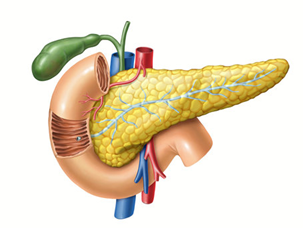
Processed foods, including cooked foods which is a form of processing food, exhaust the pancreas due to the need for the pancreas to release a high amount of insulin due to the higher glycemic index and load of the food.
As the pancreas must secrete high amounts of insulin to effectively lower the blood sugar, over time, this exhausts the pancreas and can lead exhaustion of the pancreas. If the pancreas no longer secrete enough insulin to maintain normal, healthy blood sugar levels, this is now type 2 diabetes.
Glycemic Index and Glycemic Load
Let's review the glycemic index and glycemic loads of various foods to see the difference between processed foods and whole foods.
Glycemic index refers to how quickly a food raises your body's blood sugar.
Glycemic load measures how quickly the food raises your blood sugar and how many carbohydrates are in a typical serving. The glycemic load gives a more realistic measure of a food's impact on the blood sugar because it takes into account the total composition of a food (how much of the food is carbs)?
The glycemic index checks the quality of the carbs and it is measured on a scale from 0 to 100 (compared to pure glucose). Low-glycemic index foods are 55 or below. Medium-glycemic index range from 56-69. High-glycemic index foods are 70 or greater.
To understand glycemic index well, you must know that blood sugar (and insulin levels) rise every tiem you eat any food containing carbohydrates. How high they rise, and how fast, depend on the food. Eating pure glucose causes the highest spike in blood sugar and insulin. This has a glycemic index of 100, the highest level that can be reached. Eating a serving of white rice spikes blood sugar significantly, close to eating pure glucose. Other foods, such as most vegetables, cause a much slower and smaller spike to blood sugar, and, thus, insulin. A food with a glycemic index of 32% spikes blood sugar only 32% as much as pure glucose.
Glycemic load checks the quality and quantity of carbs of a food. It is calculated by the formula, GI x Carbs in grams per serving/100. It reflects real-world meal impacts. Low-glycemic load foods are 10 or lower. Medium-glycemic load foods range from 11-19. High-glycemic load foods are 20 or higher.
To get an idea of the difference between glycemic index and glycemic load, you can examine a fruit such as watermelon, which the carb component of the fruit has a glycemic index of 80, however, the glycemic load is 5, because watermelon is mostly water and not pure carbs. Therefore, watermelon overall due to its composition has minimal impact on blood sugar.
This is why we will focus more on the glycemic load rather than the glycemic index.
Most fresh fruits are low-glycemic load foods due to their water content, their fiber, and their fructose content. Therefore, they do not spike the blood sugar so much.
Just to let you know, glucose has a glycemic index of 100, while fructose has a glycemic index of 23.
Glycemic Index and Load of Whole Foods
Fruits are low-glycemic load foods.
Pineapples have a glycemic index of 66 and a glycemic load of 6.
Oranges have a glycemic index of 47 and a glycemic load of 6.
Ripe bananas have a glycemic index of 51 and a glycemic load of 13.
Cantaloupes have a glycemic index of 68 and a glycemic load of 4.
Mangoes have a glycemic index of 60 and a glycemic load of 9.
Thus, you can see that fruits are low to medium glycemic foods.
Vegetables are even lower glycemic index foods and lower glycemic load foods.
Cucumbers have a glycemic index of 15 and a glycemic load of 0.4.
Lettuce has a glycemic index of 15 and a glycemic load of 0.5.
Celery has a glycemic index of 15 and a glycemic load of 0.3
Glycemic Index and Load of Processed Foods
Now let's look at processed foods.
Bagels have a glycemic index of 72 and a glycemic load of 25-37.
White rice has a glycemic index of 73 and a glycemic load of 20-29.
Soft pretzels have a glycemic index of about 80 and a glycemic load of 18-51.
French fries have a glycemic index of around 75 and a glycemic load of 22-31.
So you can see how much more processed foods spike blood sugar and insulin levels.
Higher blood sugar spikes require more insulin secretion by the pancreas to bring levels back to pre-meal levels.
Over time, this exhausts the pancreas more, leading to exhaustion of the pancreatic beta cells residing in clusters called the Islets of Langerhans. This can lead to the beta cells being overworked and lead to pancreatic insulin insufficiency. The body will then be unable to maintain normal, healthy blood sugar levels, which is the beginning of type 2 diabetes.
To prevent this, eliminating processed foods, which includes cooked foods like baked potatoes and mashed potatoes, is crucial for reducing the possibility of development of type 2 diabetes.
Whole foods are always better because they have natural fructose sugar, ample water content, and they have all the fiber intact which helps to slow the absorption of the sugars.
By David Hylton, FNP-C
February 20, 2026
Home | About | Services | Articles | Practitioner | FAQs | Contact |